
Mindful Parenting – tips to deal with teenagers- My story

Good morning, my beloved readers,

Today the day is beautiful and the coffee I’m savoring is exquisite. I have two daughters and the youngest is in her senior year of high school, about to enter college. The challenges are continuous. I live very proud of the achievements of my two daughters. However, sometimes the exchange with my younger child is not easy because all of the sudden that she is an adolescent, she knows everything, and this is what happens:

She knows how to drive a car … and I do not

She knows how to reheat food in the microwave … and I do not

She knows how to separate the clothes before putting them to wash … and I do not

She knows everything about everything … and I do not.

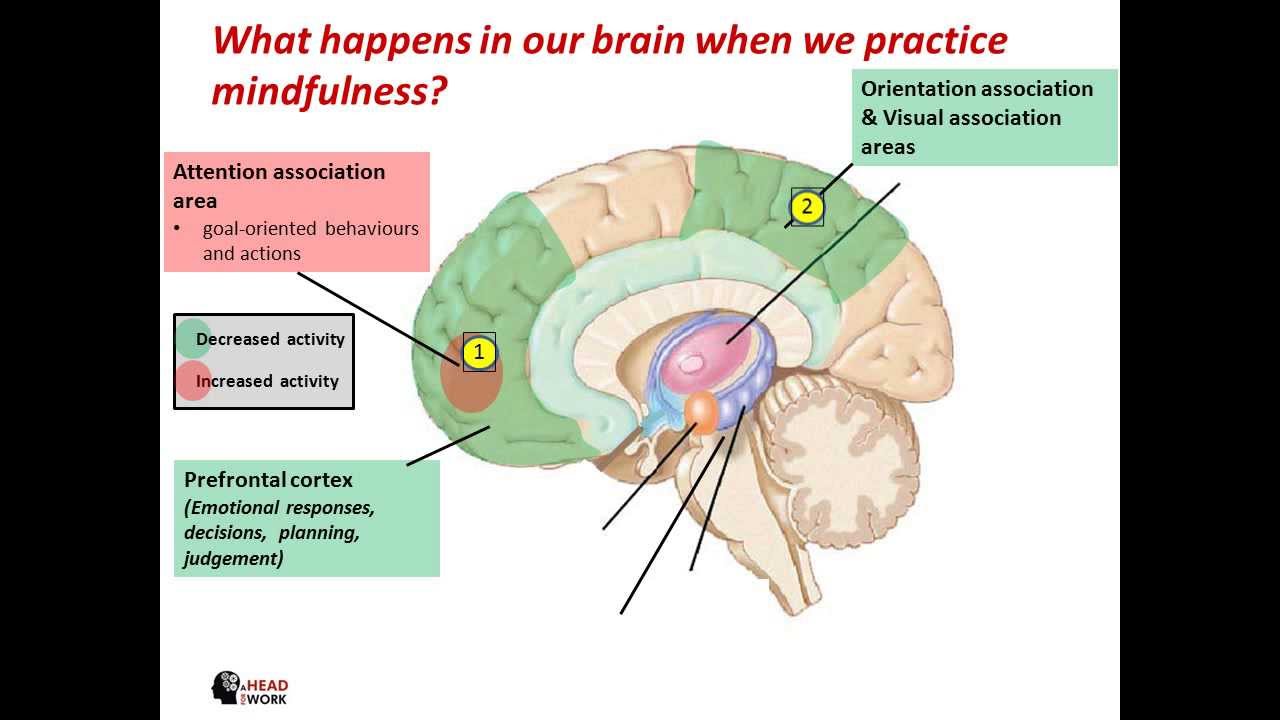
Teenagers are very emotional primarily because the pre-frontal area of their brain is developing until they are 25 years old. Although, their brains will continue changing their structure after their 25th birthday and beyond with the ability that the brain has to self-generate new connections due to neuroplasticity.

And this explains why adolescents say and do things they regret later, or which they can find no explanation.

At times my younger daughter’s temper, and impatient attitude puts me over the edge; and I apply Mindfulness before I pop as a pressure cooker.

If this does not work for me, I count 10 seconds and apply the breathing in and breathing out again. Sometimes I have to wait until she is less emotional to ask her to explain to me again the reason behind her anger, or it is me who needs to clarify to my daughter the situation that made me upset with her.

I know it sounds like a broken record, but we as parents have to listen to our teenage children. It is important that we (the parents) HOLD and show emotional balance at all times because they will follow our example when they become adults and parents themselves. Adolescents have a tendency to get irritated easily. We need to remain calm without being manipulated.

We must continue encouraging our teenagers to give the best of themselves. It is critical to acknowledge their attributes, talents, strengths, and give them more autonomy. [Yeah right … I don’t even believe myself]. I supported my youngest daughter get her driver’s license a month ago, and she is in the process of acquiring vehicle, and believe me, I am happy, but at the same time, I am also concerned, I have mixed feelings… because I’m not ready yet to see my 17 year old stepping outside to drive alone.

Another little tip, we must know how to pick our battles, the rules can be negotiated with dialogue, what  cannot be negotiated is the limit we already established .

And finally, we need to give ourselves a daily “bath” of patience, because this stage will pass and they will outgrow their adolescent years. Let’s continue to enjoy our children, and our family. Au revoir.  MSV

DEALING WITH ANXIETY WITH MINDFULNESS- MY STORY

I am going to share my story of the reason behind my profound interest with the practice of mindfulness. I was the type of person that used to worry too much about unfounded fears.  I said I was… and I meant it. I used to worry about what others would say about my decisions, about my choices, about my family (daughters), about my health… Over time all these unnecessary worries take the joy of someone’s life, and for no reason we are torturing ourselves.

When we are anxious we are not enjoying the present moment, and we do not appreciate the simple things in life.  Reading the books of Dr. Wayne Dyer since 2012 have paved the way to bring meditation into my daily practice. The first book that l read from him was: Your Sacred Self.  After reading that book, a personal transformation began at the subconscious level. This story is not about the book, but I encourage you strongly to read it.  Now, going back to mindfulness, I became aware that there are different types of meditation, but I learned that mindfulness meditation helps us shift the attention we put into our thoughts (that cause our anxiety) to our breathing. I took the eight weeks Mindfulness Stress Based Reduction (MSBR) training modeled on the program founded by Jon Kabat-Zinn at the University of Massachusetts Medical School which I completed in July 16.  Folks, consistent practice of mindfulness helps reduce anxiety and high blood pressure.  “According to a study published in Nurse Education Today magazine in December 2012, perform for a week a practice of mindfulness meditation decreases the level of anxiety and blood pressure”Retrieved from:  http://www.respiravida.net/

You only need to devote 20 minutes daily to this type of meditation. You can practice it by sitting in your recliner, in your bed, in your sofa, or in your yoga mat (for those who practice yoga). I know that I sound like a broken record, but we need to focus on the breathing and when our thoughts make us aware that we are putting our attention on them and not in the breathing, we gently label our thoughts while telling ourselves, “here you go…that was a feeling, ok…, that was an opinion” and try to refocus on our breathing. Otherwise we will end up being unkind and judgmental with ourselves because when the thoughts and fears our minds produced are coming back, we start to feel stress by believing we are not doing a good meditation. When that happens, it is critical to refocus on our breathing.  You will feel changes in a matter of months.  You will think more clearly, your attention will be in the present moment and you will begin enjoying life, with your renew self-confidence by putting your fears away.

Anxiety and Mindfulness

    Mindfulness helps us overcome anxiety.  We are anxious about the future and what is going to happen to us, to our loved ones, to our communities. We live in a fast-pace environment that have us react and behave in “auto-pilot” mode.  We worry about things that may never happen; then, our  racing thoughts […]

A Look at How the Brain Rewires Itself, with Consistent Practice of Mindfulness


These findings are exciting, Secular Mindfulness is scientific based, and not some magic booh-gah-booh. I want to share evidence that brain MRIs show  after an individual has participated in an 8 week Mindfulness Stress Reduction Based (MSBR) program.  Here are the findings:

  1. The pre-frontal cortex increases its size.  The part of the brain associated with higher order  functions such as awareness, organization, meta-cognition, concentration, reason,  becomes thicker.
  2. The amygdala decreases its size. The amygdala is the part of the brain associated with fear and emotion.

However, look at this:

After an individual have practiced Mindfulness meditation for more than 8 weeks, approximately 3 years, the brain MRIs show different results.  The pre-frontal cortex returns to its normal size. It seems the brain received the “memo” through consistent meditation that the new way of reasoning is the new norm.  Once the brain readjusts to new habits and new thinking, it performs the practice of Mindfulness meditation without effort, and this is living and scientific evidence of neuroplasticity at any age. These results are very encouraging since this practice is demonstrating that it has the ability to improve individuals quality of life.