Educational consulting and strategies for mental success. Family owned since 2016. Get to know more about mindfulness and mental wellness here, welcome to our blog!
🌿 THROWBACK | When My Voice Became Part of Puerto Rico’s Climate Policy Record
Some moments in our professional journey become more meaningful with time.
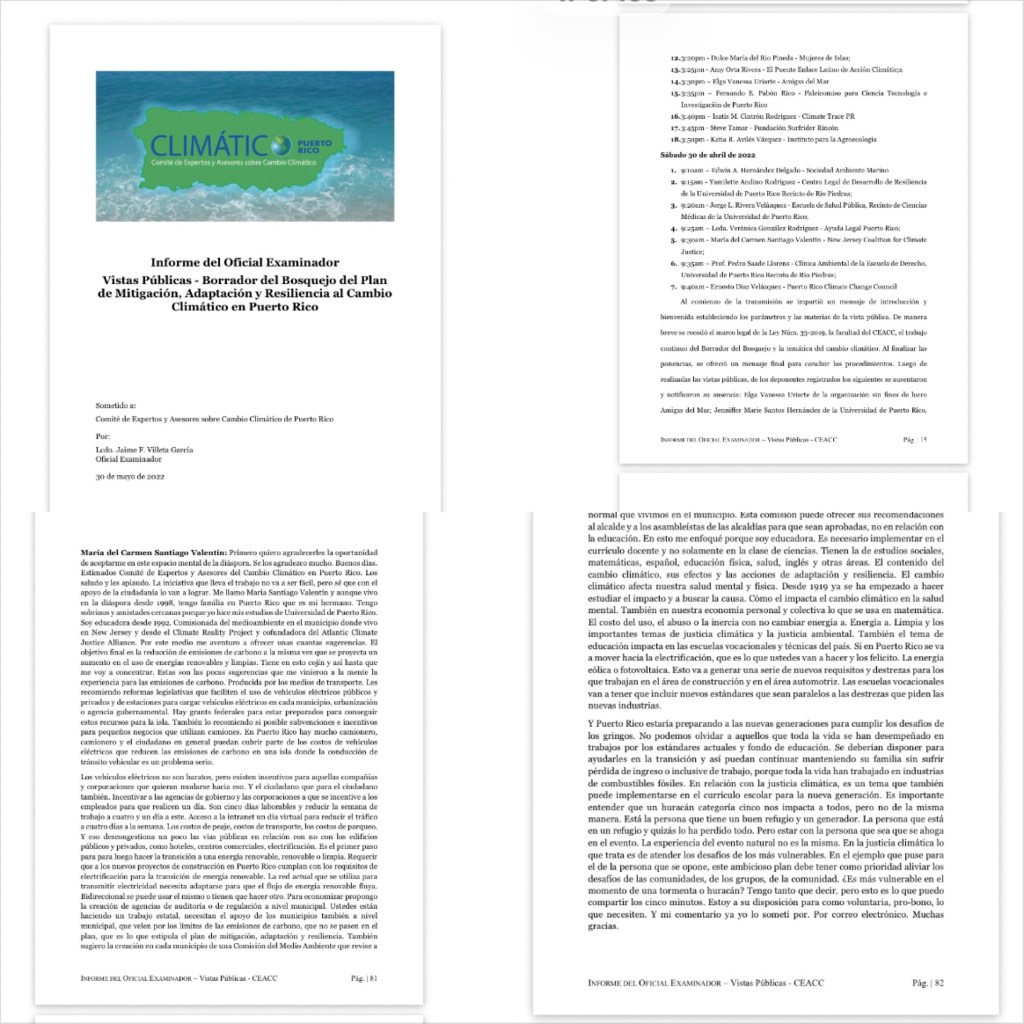
Today, I look back with gratitude and pride on the opportunity I had to testify before Puerto Rico’s Committee of Experts and Advisors on Climate Change (CEACC) during the public hearings on Puerto Rico’s Climate Change Mitigation, Adaptation, and Resilience Plan.
What makes this moment particularly meaningful is that my testimony was officially documented in a Government of Puerto Rico public record. It represented the intersection of several dimensions of my life’s work: education, environmental advocacy, climate justice, community empowerment, and my enduring connection to Puerto Rico.
In my testimony, I emphasized several principles that continue to guide my work:
🌎 Climate action must include environmental justice. Communities experiencing the greatest vulnerabilities must have a meaningful voice in climate planning.
🏝️ Puerto Rico’s communities must be at the center of resilience planning. Climate resilience is not only about infrastructure—it is about people, health, education, livelihoods, culture, and community capacity.
📚 Education is a climate solution. Building climate literacy empowers young people, educators, families, and communities to understand risks and participate in solutions.
🤝 Community voices belong at the policy table. Effective climate policy requires collaboration among government, educators, scientists, community organizations, and residents.
🌱 Mitigation, adaptation, and resilience must be connected to equity and opportunity. Climate strategies should strengthen communities while protecting Puerto Rico’s natural resources and future generations.
Looking back, I recognize this testimony as part of a much larger trajectory.
I am especially grateful that this contribution is preserved in an official government document. It is a reminder that our voices, our expertise, and our lived connections to our communities can become part of the public record and part of the policy conversation.
Education. Environmental justice. Climate action. Community resilience. Puerto Rico.
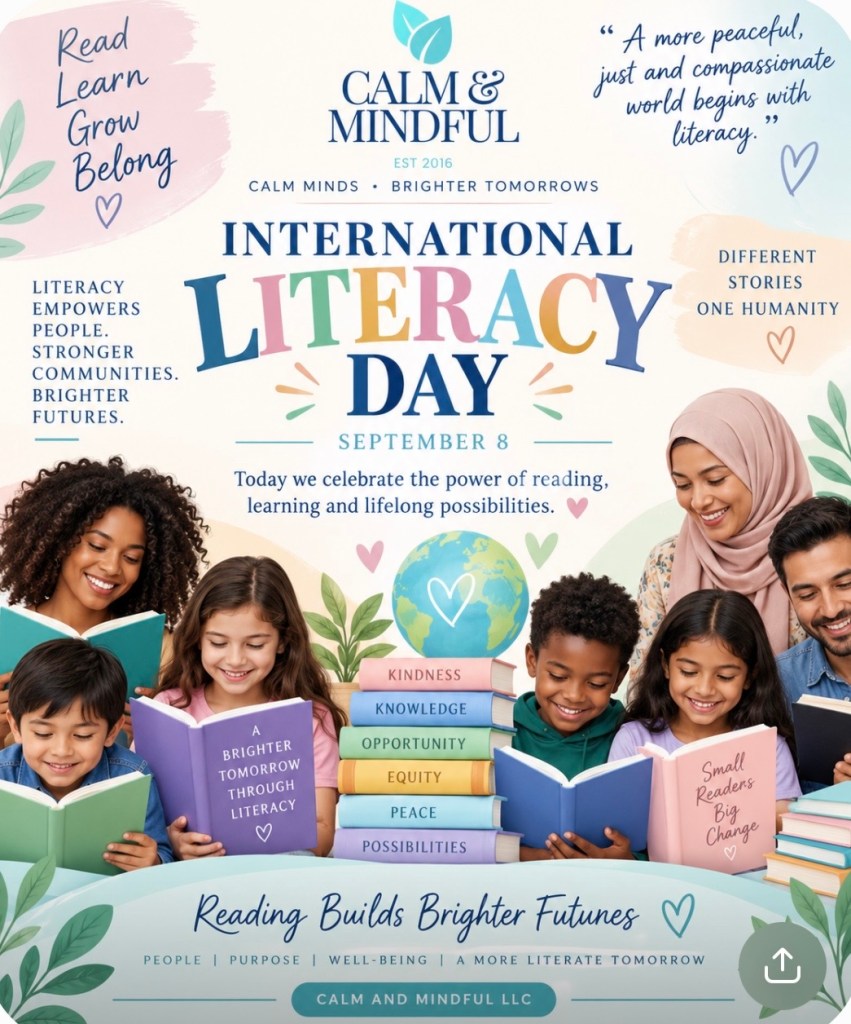
International Literacy Day is more than a celebration of reading and writing—it is a call to action for equity, inclusion, wellness, and sustainable futures.
As a literacy educator, Learning Disabilities Teacher Consultant, researcher, multilingual professional, and principal consultant at Calm and Mindful LLC, I see literacy as a bridge: a bridge between students and opportunity, families and schools, communities and civic participation, and people and the planet.
Literacy must be accessible to every learner, including students with learning differences, multilingual learners, students in career and technical education, and communities historically underserved by systems of education. It must include the ability to understand information, ask critical questions, communicate with confidence, navigate digital spaces, and make informed choices about health, wellbeing, the environment, and one’s future.
This year, UNESCO marks the 60th anniversary of International Literacy Day under the theme “Literacy for people, the planet and prosperity.” The theme reminds us that literacy is not isolated from the challenges of our time. It is essential to climate understanding, economic mobility, peacebuilding, mental-health awareness, gender equity, and meaningful participation in society.
At Calm and Mindful LLC, we believe that learning thrives when education is inclusive, culturally responsive, trauma-informed, and connected to community wellbeing. Supporting literacy means supporting the whole person—their language, strengths, identity, social-emotional needs, aspirations, and right to be heard.
On International Literacy Day, let us recommit to making literacy instruction equitable, multisensory, accessible, and empowering. Let us equip educators, engage families, honor multilingualism, support learners with disabilities, and ensure that every child and adult has the tools to read the word—and help transform the world.
Literacy is dignity. Literacy is access. Literacy is resilience. Literacy is a pathway to a more just, peaceful, and sustainable future.
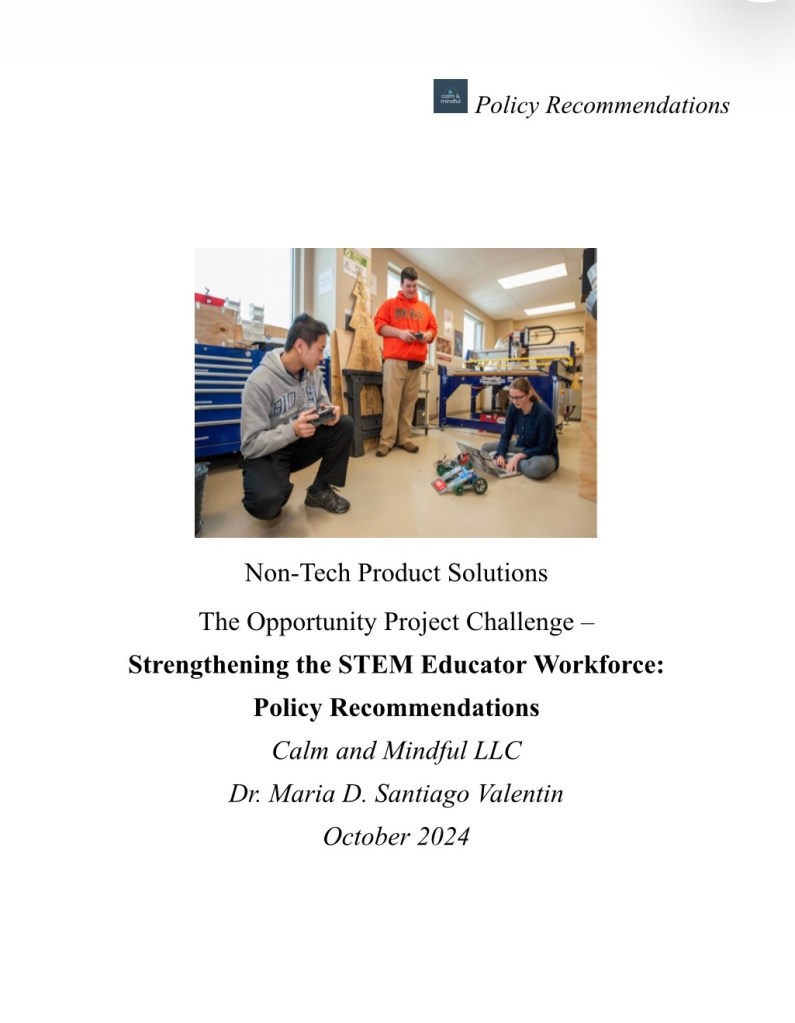
We’re excited to announce the publication of our 2024 research, The Opportunity Project Challenge – Strengthening the STEM Educator Workforce: Policy Recommendations, authored by Dr. Maria D. Santiago Valentin and now publicly available through Zenodo.
The United States is facing a STEM educator shortage that shows no signs of slowing down. During the 2017–2018 school year alone, nearly 100,000 STEM teaching positions went unfilled at the high school level, and close to 150,000 went unfilled at the middle school level. These aren’t just numbers on a page — they represent classrooms without qualified instruction in the subjects our students need most to compete in a rapidly changing world.
Part of the problem comes down to money. STEM professionals who choose to teach often take a pay cut of roughly $40,000 compared to what they could earn elsewhere in their field — a gap researchers call the “wage penalty.” When the private sector consistently outbids the classroom, it’s no surprise that talented STEM minds look elsewhere, and that the teachers who do enter the profession often don’t stay long. Many novice STEM teachers leave the classroom before their fifth year.
This shortage doesn’t affect all students equally. It deepens existing inequities, particularly for students in under-resourced schools who are already less likely to have access to qualified STEM instruction — a gap that contributes to the ongoing underrepresentation of minorities and women in STEM careers.
How We Approached the Problem
Rather than relying solely on existing literature, we wanted to understand what STEM educators themselves were experiencing. Our research combined:
Semi-structured interviews with STEM educators, analyzed manually using NVivo coding to identify patterns across two analytical cycles
A review of current STEM legislation across all 50 states and at the federal level
An extensive literature review examining the challenges facing the STEM educator workforce
This mixed approach let us ground our recommendations not just in what researchers have found, but in what teachers are actually living through in classrooms across the country.
Three Areas for Policy Change
The paper organizes its recommendations around three interconnected areas:
1. Enhancing Teacher Training Programs
Effective preparation is one of the strongest predictors of whether a teacher stays in the profession. Our recommendations call for collaboration between universities, state departments of education, and industry to build comprehensive, equitable national STEM standards — including training in social-emotional learning, classroom management, and support for diverse and special-needs populations. We also recommend formalizing mentorship as a required, well-supported position for novice STEM teachers, rather than treating it as an informal extra duty.
2. Increasing Financial Incentives for STEM Educators
Competitive compensation isn’t just about fairness — it’s about supply. The paper recommends higher salaries, student loan forgiveness programs, and portable pension structures that let teachers move between districts and states without losing retirement benefits. We also highlight promising models like endowed chairs for STEM positions in school districts, which can help offset salary and benefits costs at the district level.
3. Supporting Ongoing Professional Development
STEM fields evolve quickly, and teachers need sustained support to keep pace. Recommendations here include funded mentorship curricula, a proposed national STEM certification that would make it easier for teachers to relocate between states, and support for attending professional conferences like those hosted by ISTE (International Society for Technology in Education) and ASCD (Association for Supervision and Curriculum Development).
Part of a Two-Part Solution
This policy paper is one of two solutions Calm and Mindful, LLC developed in response to the national STEM educator shortage. Alongside it, we built a complementary technical solution: an eight-module online training program designed to give novice STEM teachers practical, hands-on support during their earliest — and often most vulnerable — years in the classroom.
Together, the two products pair immediate, teacher-facing support with the kind of systemic policy change needed to make that support sustainable over the long term.
Presented to Federal Decision-Makers
Both solutions were developed as part of The Opportunity Project, a rapid-prototyping model led in collaboration with the U.S. Census Bureau, which brings together organizations to turn public data into usable solutions for national challenges. Our work was presented directly to the U.S. Department of Education and the U.S. Census Bureau — giving these recommendations a direct line to the people positioned to act on them.
Read the Full Paper
We’re grateful to every educator who shared their time and experience to make this research possible. We hope these recommendations serve as a useful, evidence-informed resource for policymakers, district leaders, and anyone working to build a stronger, more sustainable STEM educator workforce.
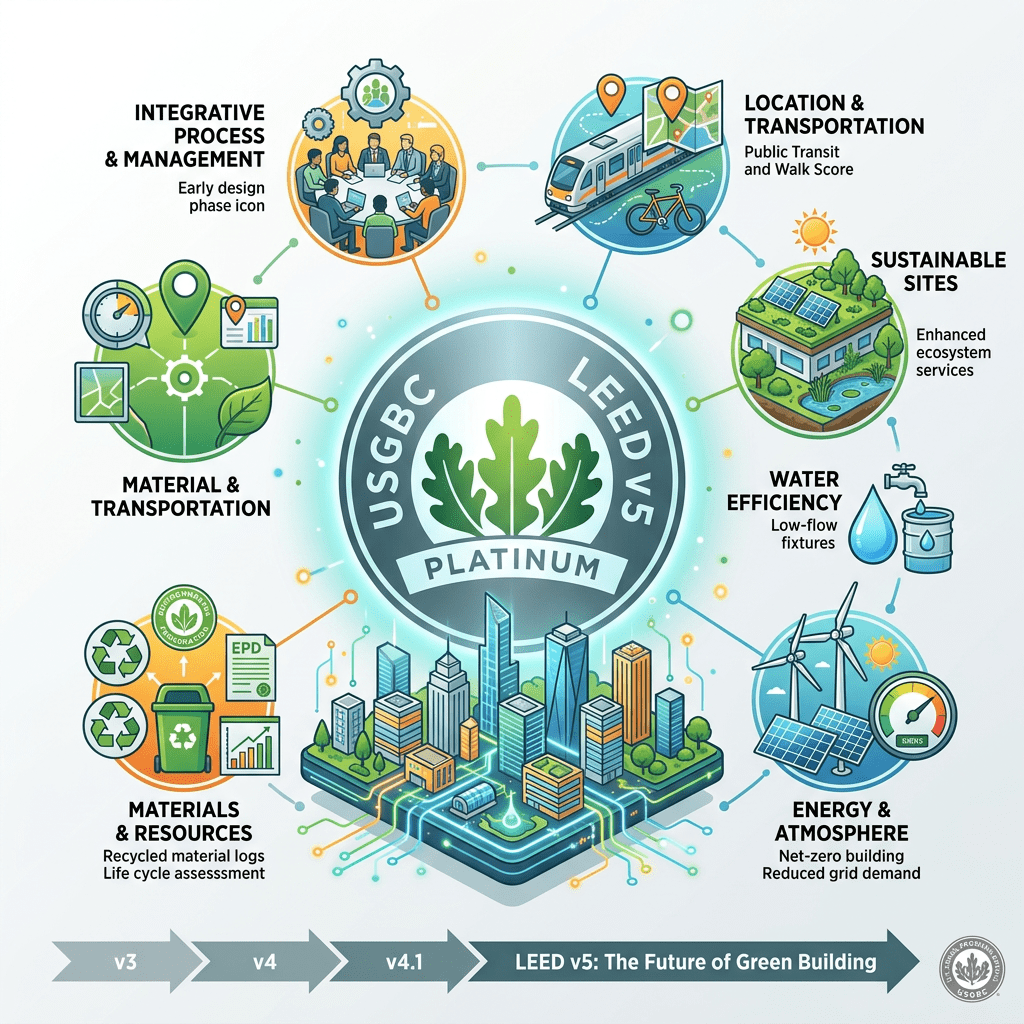
So here’s the deal with LEED v5 — USGBC just dropped its biggest update in years, and it’s honestly worth knowing about even if you’re not a builder or architect.
The headline number? Roughly 50% of a project’s certification score is now tied to decarbonization (Association of the Wall and Ceiling Industry, 2025). That’s half the whole scorecard focused on cutting carbon across a building’s entire life — embodied emissions in materials, day-to-day energy use, refrigerants, even transportation (One Click LCA, 2026). Basically, carbon isn’t a bonus category anymore. It’s the main event.
But LEED v5 isn’t just about emissions math. There’s a real focus on human and ecological health too, with about a quarter of the new credits centered on occupant well-being, equity, and healthier, more transparent spaces for the people who actually use these buildings (BuildingGreen, 2025). It’s a nice reminder that buildings are for people first.
Then there’s resilience. Every single LEED v5 project now has to complete a climate resilience assessment, helping teams spot hazards early, understand risk, and protect the ecosystems around them (Facility Executive, 2025). As USGBC’s Sarah Zaleski put it, people want buildings that cut emissions, manage climate risk, stay healthy, and protect the natural world around them all at once (Facility Executive, 2025).
Put it all together and LEED v5 is basically USGBC connecting the dots between carbon, health, and resilience instead of treating them like separate checkboxes. Registration is already open, so this isn’t some future concept — it’s happening now (Construction Owners, n.d.). Pretty exciting stuff, honestly.