🍃**THROWBACK | When My Voice Became Part of Puerto Rico’s Climate Policy Record**

🌿 THROWBACK | When My Voice Became Part of Puerto Rico’s Climate Policy Record

Some moments in our professional journey become more meaningful with time.

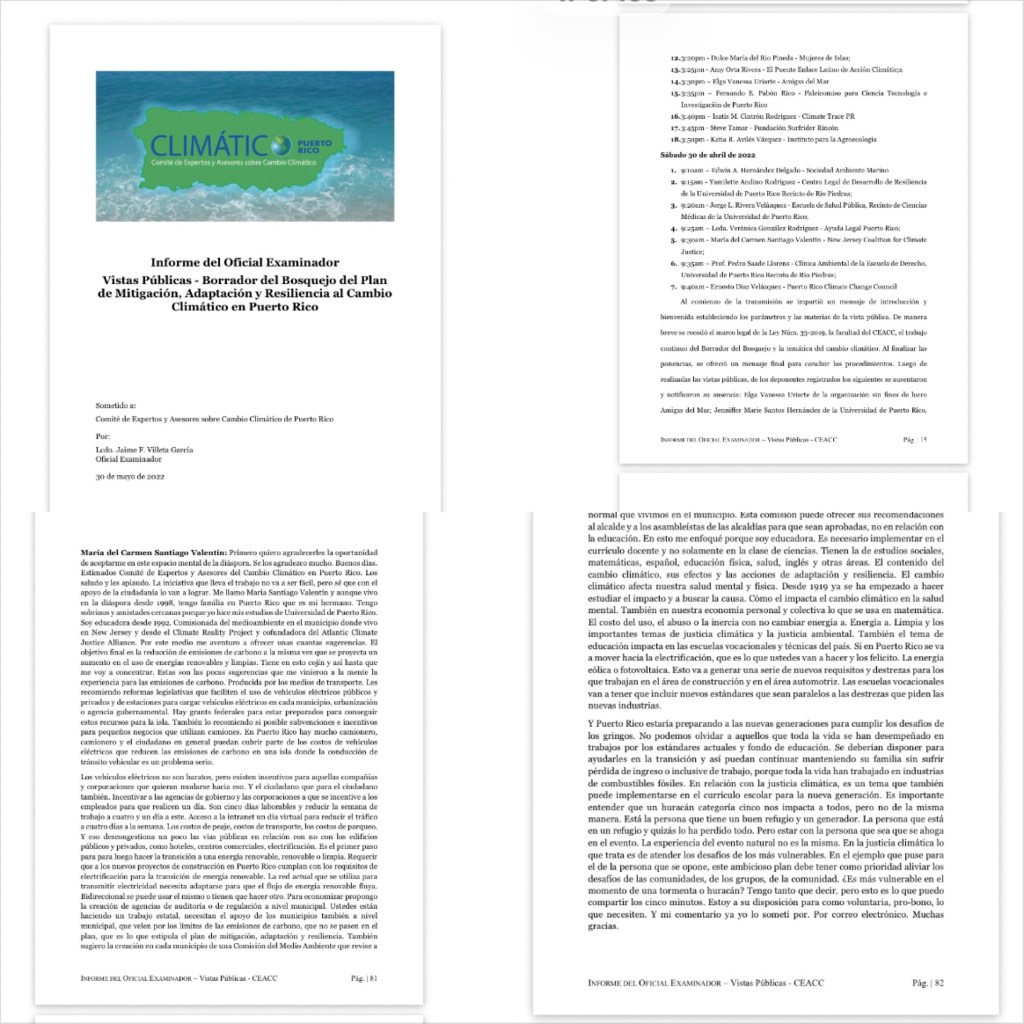
Today, I look back with gratitude and pride on the opportunity I had to testify before Puerto Rico’s Committee of Experts and Advisors on Climate Change (CEACC) during the public hearings on Puerto Rico’s Climate Change Mitigation, Adaptation, and Resilience Plan.

What makes this moment particularly meaningful is that my testimony was officially documented in a Government of Puerto Rico public record. It represented the intersection of several dimensions of my life’s work: education, environmental advocacy, climate justice, community empowerment, and my enduring connection to Puerto Rico.

In my testimony, I emphasized several principles that continue to guide my work:

🌎 Climate action must include environmental justice. Communities experiencing the greatest vulnerabilities must have a meaningful voice in climate planning.

🏝️ Puerto Rico’s communities must be at the center of resilience planning. Climate resilience is not only about infrastructure—it is about people, health, education, livelihoods, culture, and community capacity.

📚 Education is a climate solution. Building climate literacy empowers young people, educators, families, and communities to understand risks and participate in solutions.

🤝 Community voices belong at the policy table. Effective climate policy requires collaboration among government, educators, scientists, community organizations, and residents.

🌱 Mitigation, adaptation, and resilience must be connected to equity and opportunity. Climate strategies should strengthen communities while protecting Puerto Rico’s natural resources and future generations.

Looking back, I recognize this testimony as part of a much larger trajectory.

I am especially grateful that this contribution is preserved in an official government document. It is a reminder that our voices, our expertise, and our lived connections to our communities can become part of the public record and part of the policy conversation.

Education. Environmental justice. Climate action. Community resilience. Puerto Rico.

📄 Read the official Government of Puerto Rico document containing my testimony:
Puerto Rico Climate Change Public-Hearing Report — CEACC

Our voices matter. Our communities matter. And our participation in shaping a more resilient future matters.

#Throwback #ClimateJustice #EnvironmentalJustice #PuertoRico #ClimateAdvocacy
A look at USGBC’s biggest update in years LEED v5 — from the team at Calm and Mindful LLC

LEED v5: The Quick and Friendly Rundown

So here’s the deal with LEED v5 — USGBC just dropped its biggest update in years, and it’s honestly worth knowing about even if you’re not a builder or architect.

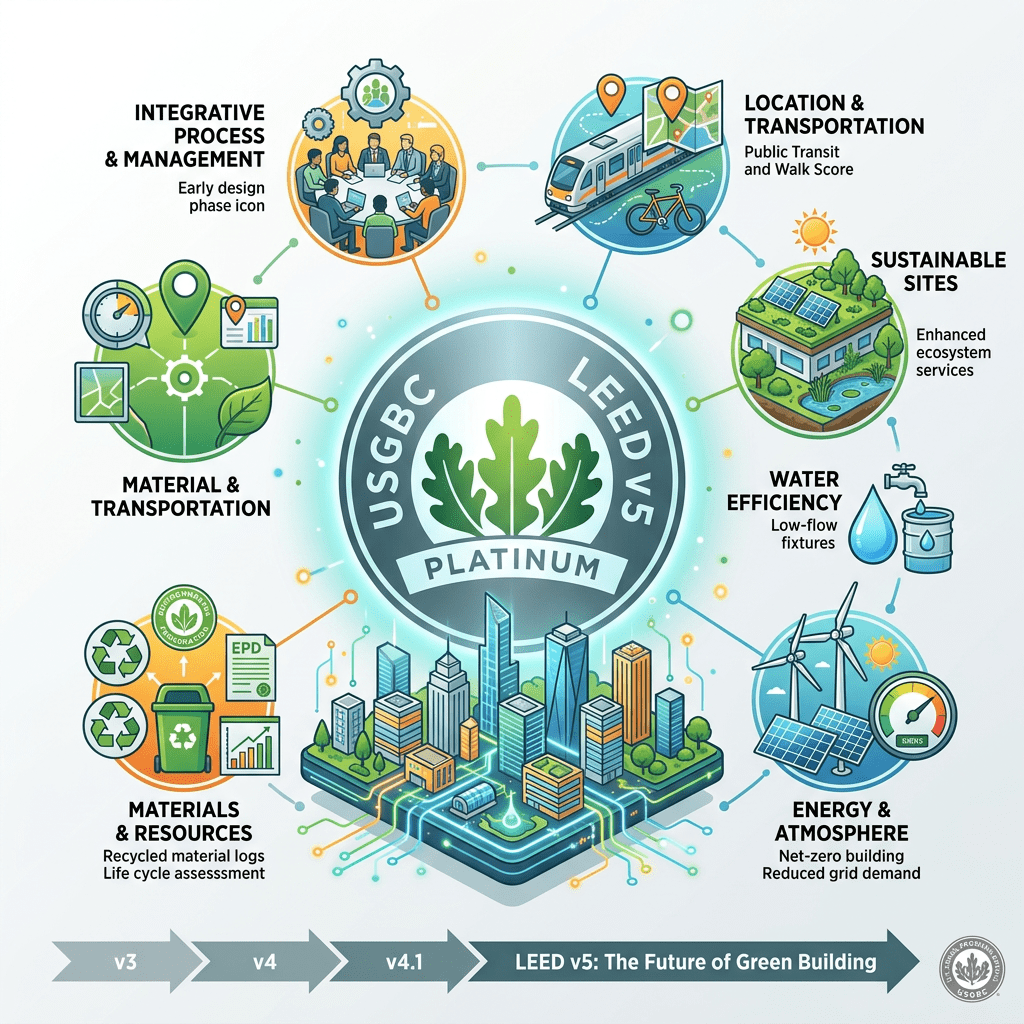
The headline number? Roughly 50% of a project’s certification score is now tied to decarbonization (Association of the Wall and Ceiling Industry, 2025). That’s half the whole scorecard focused on cutting carbon across a building’s entire life — embodied emissions in materials, day-to-day energy use, refrigerants, even transportation (One Click LCA, 2026). Basically, carbon isn’t a bonus category anymore. It’s the main event.

But LEED v5 isn’t just about emissions math. There’s a real focus on human and ecological health too, with about a quarter of the new credits centered on occupant well-being, equity, and healthier, more transparent spaces for the people who actually use these buildings (BuildingGreen, 2025). It’s a nice reminder that buildings are for people first.

Then there’s resilience. Every single LEED v5 project now has to complete a climate resilience assessment, helping teams spot hazards early, understand risk, and protect the ecosystems around them (Facility Executive, 2025). As USGBC’s Sarah Zaleski put it, people want buildings that cut emissions, manage climate risk, stay healthy, and protect the natural world around them all at once (Facility Executive, 2025).

Put it all together and LEED v5 is basically USGBC connecting the dots between carbon, health, and resilience instead of treating them like separate checkboxes. Registration is already open, so this isn’t some future concept — it’s happening now (Construction Owners, n.d.). Pretty exciting stuff, honestly.

References

Association of the Wall and Ceiling Industry. (2025, May 8). USGBC launches LEED v5 with focus on decarbonization and health. https://www.awci.org/about/announcements/usgbc-launches-leed-v5-with-focus-on-decarbonization-and-health/

BuildingGreen. (2025, June 18). LEED v5 is here. https://www.buildinggreen.com/feature/leed-v5-here

Construction Owners. (n.d.). USGBC launches LEED v5 for healthier, resilient buildings. https://www.constructionowners.com/news/usgbc-launches-leed-v5-for-healthier-resilient-buildings

Facility Executive. (2025, May 5). USGBC launches LEED v5. https://facilityexecutive.com/usgbc-launches-leed-v5/

One Click LCA. (2026, March 13). LEED v5 launches with a focus on LCA & embodied carbon. https://oneclicklca.com/en/resources/articles/leed-v5-launches-with-a-focus-on-lca-embodied-carbon

Diagram showing LEED v5 Platinum green building elements including integrative process, location, sustainable sites, water efficiency, energy, materials, and transportation
Key components of LEED v5 Platinum certification for sustainable buildings

Celebrating a decade of Calm and Mindful LLC- women led family owned business.

Calm and Mindful LLC: Partnerships, Progress, and Measurable Impact

Calm and Mindful LLC continues to serve as a model of visionary collaboration, bringing together education, sustainability, wellness, and community empowerment under a unified mission. Through strategic partnerships and evidence-informed initiatives, the organization has strengthened its national and global reach, turning shared values into measurable, real-world outcomes that enhance individual and collective wellbeing.

Advancing Sustainability through Strategic Alignment

In 2025, Calm and Mindful LLC took a significant step forward by being accepted into the New Jersey Department of Environmental Protection (NJDEP) Clean Corridor Coalition (C3), a program that unites organizations working toward clean energy, workforce development, and sustainable infrastructure. The C3 listing (NJDEP, 2025) marked a milestone in the company’s sustainability portfolio, validating its commitment to environmental stewardship and inclusive innovation.

Through this partnership, Calm and Mindful LLC has contributed to regional sustainability initiatives that integrate environmental resilience with economic opportunity. Projects under this collaboration emphasize workforce readiness for the green economy, resilience training for emerging professionals, and educational programs that promote the intersection of wellbeing and ecological mindfulness. These efforts align with the organization’s philosophy that sustainability is not merely an environmental goal—it is a pathway to social equity and holistic health.

Strengthening Education through National Collaboration

Education remains the cornerstone of Calm and Mindful LLC’s mission. Between 2022 and 2025, the organization partnered with the Federal U.S. Department of Education and the Top Opportunity Project to address the growing national demand for qualified STEM educators. This partnership reflects a forward-looking response to systemic needs in teacher preparation and science/technology education equity.

Together, these institutions co-developed a policy-focused white paper and an eight-module online professional learning course for educators. The materials present research-backed strategies for curriculum design, classroom equity, and educator wellness—ensuring that teachers are equipped not only with instructional expertise but also with resilience tools to navigate the complexities of today’s classrooms. This initiative has served as both a learning resource and a policy influence, reinforcing the importance of cross-sector collaboration in shaping the future of education.

Through ongoing collaboration with national and community-based partners, Calm and Mindful LLC has positioned itself as a trusted liaison between educational innovation and practical implementation. The organization’s approach highlights how professional development can drive systemic change when grounded in evidence, inclusivity, and empathy.

Empowering Families and Youth through Community Partnerships

Calm and Mindful LLC further expanded its community-centered mission through a productive partnership with the Latino Institute of New Jersey, founded by Mr. William Colon. This strong alliance reflects the organization’s belief in culturally tailored education and bilingual empowerment.

Together, they facilitated a series of bilingual workshops addressing stress management, school violence prevention, harassment, and bullying. These interactive sessions—designed for parents and guardians—helped bridge communication gaps between schools and families while promoting emotional literacy and positive coping strategies. The workshops provided parents with accessible tools to build safer, compassionate community environments and to support youth development from a place of empathy and empowerment.

The results were both immediate and enduring: increased family engagement in school activities, improved parent-teacher collaboration, and greater awareness of social-emotional wellbeing in educational settings. In this partnership, Calm and Mindful LLC has demonstrated the measurable impact of localized education—showing that lasting change begins with strong, informed, and supported families.

Expanding Global and Local Awareness

Beyond its local initiatives, Calm and Mindful LLC continues to collaborate internationally with organizations that share its commitment to peace, sustainability, and gender equity. Key engagements with Women’s Federation for World Peace International (WFWPI), NGO-CSW/NY, Climate Generation, the World Bank, and the Franklin Public Library underscore the organization’s role as both a convener and a contributor to global discourse.

These collaborations provide meaningful platforms for dialogue on climate action, gender equity, and peacebuilding—themes that align with the United Nations Sustainable Development Goals (SDGs). Through workshops, community dialogues, and educational events, Calm and Mindful LLC has fostered an environment where policy discussions translate into citizen action, and global principles are adapted into local contexts. Whether through youth climate education or gender-responsive training, the organization’s impact continues to ripple outward—connecting local communities with global frameworks for justice and sustainability.

A Record of Measurable Action and Shared Vision

The success of Calm and Mindful LLC’s partnerships lies not only in their breadth but also in their depth. Each collaboration is guided by an evidence-based framework that prioritizes measurable outcomes—such as stronger educator retention, improved community wellness, or expanded environmental literacy. Through continuous evaluation and participatory feedback mechanisms, the organization ensures accountability and impact across every initiative.

Ultimately, Calm and Mindful LLC’s story is one of collective progress. By aligning its expertise in education, sustainability, and wellness with the strengths of public agencies, nonprofits, and local communities, the organization has proven that partnership is one of the most powerful strategies for social transformation. Calm and Mindful LLC’s commitment to responsive, mission-driven collaboration continues to set a standard for organizations dedicated to advancing opportunity, inclusion, and meaningful systemic change.


References

  • New Jersey Department of Environmental Protection (2025). Clean Corridor Coalition (C3) Teaming Partners List.https://dep.nj.gov/wp-content/uploads/drivegreen/12.31.2025-c3-teaming-partners-list.xlsx
  • U.S. Department of Education & Top Opportunity Project (2022–2025). STEM Educator Workforce Development Collaboration Materials.
  • Latino Institute of New Jersey, Mr. William Colon (2024). Bilingual Parent Engagement Workshops Reports.
  • Women’s Federation for World Peace International (WFWPI), NGO-CSW/NY, Climate Generation, The World Bank, Franklin Public Library (2023–2025). Collaborative Dialogue and Educational Programming Initiatives.

The Importance of the Educational Achievement Evaluation for College Applications

An educational evaluation for college application that uses the Woodcock-Johnson (WJ) is a comprehensive assessment process designed to measure a student’s cognitive abilities, academic achievement, and sometimes oral language skills. This evaluation is often required for students seeking accommodations in college, such as extended time on tests, or for those who wish to document learning differences or disabilities as part of the application process.

What Is the Woodcock-Johnson?

The Woodcock-Johnson (currently in its fifth edition, WJ V, and previously WJ IV) is a set of individually administered, standardized tests that assess:

– **Cognitive abilities** (intellectual functioning, problem-solving, memory, processing speed)

– **Academic achievement** (reading, writing, math, and academic knowledge)

– **Oral language abilities** (listening, speaking, comprehension).

Purpose in College Applications

For college applications, the Woodcock-Johnson is most commonly used as part of a psychoeducational evaluation to:

– Document learning disabilities or ADHD for accommodation requests

– Provide objective evidence of academic strengths and weaknesses

– Inform colleges of a student’s unique learning profile, especially for students seeking support services or alternative testing arrangements.

What the Evaluation Involves

– **Administration**: The WJ is administered one-on-one by a qualified professional (often a psychologist or educational diagnostician). The process typically takes 1–3 hours, depending on the batteries used.

– **Components**: The evaluation may include the Tests of Achievement (academic skills), Tests of Cognitive Abilities (intellectual functioning), and sometimes Tests of Oral Language.

– **Subtests**: These cover skills such as reading comprehension, math calculation, writing fluency, spelling, listening comprehension, and more.

– **Scoring**: Results are provided as standard scores, percentiles, and age/grade equivalents, and are interpreted in the context of the student’s educational history and other relevant data.

Why Colleges Request or Accept It

– **Objective Data**: The WJ provides norm-referenced, objective data about a student’s academic and cognitive functioning.

– **Diagnosis and Documentation**: It is widely accepted for diagnosing learning disabilities and for documenting the need for accommodations under the Americans with Disabilities Act (ADA) and Section 504.

– **Insight for Support**: Colleges use this information to determine eligibility for academic support services and to tailor accommodations to the student’s needs.

Typical Process

1. **Referral**: A student is referred for evaluation (by a counselor, doctor, or as part of a college’s application process).

2. **Testing**: The WJ is administered, possibly along with other assessments (e.g., IQ tests, attention or executive function measures).

3. **Report**: A comprehensive report is generated, summarizing findings, diagnoses (if any), and recommended accommodations.

4. **Submission**: The report is submitted to the college’s disability services or admissions office as required.

Key Points

– The Woodcock-Johnson is a trusted, comprehensive tool for educational evaluation from childhood through adulthood. 

– For college applications, it is primarily used to document learning differences and support requests for accommodations.

– The evaluation must be recent (usually within 3–5 years) and conducted by a qualified professional to be accepted by most colleges.

In summary, an educational evaluation with the Woodcock-Johnson for college application provides detailed, standardized information about a student’s learning profile, which is essential for documenting learning disabilities and securing appropriate academic accommodations in higher education settings.

World Literacy Summit at University of Oxford.

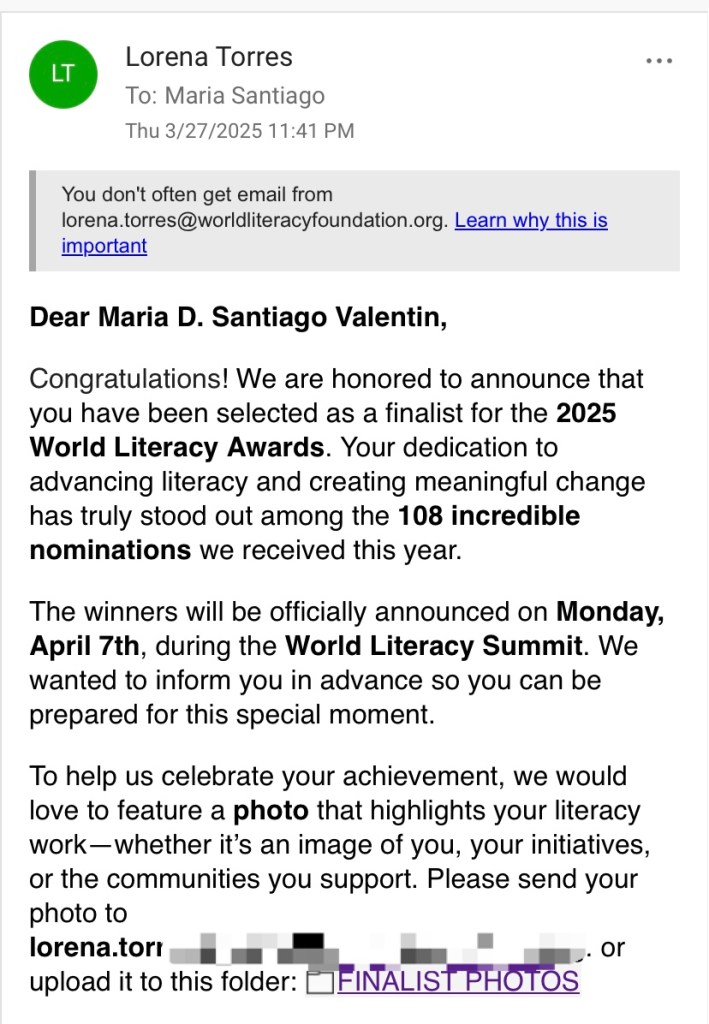
I am deeply honored to share that my doctoral research has been recognized under the category of Academic Research Recognition as one of the five finalists at the prestigious World Literacy Summit, standing out among 108 dissertations submitted from around the globe. This recognition not only highlights the significance of my work but also underscores the importance of advancing literacy within Career and Technical Education (CTE) as a means to drive social change, break cycles of poverty, and promote socioeconomic mobility.

The World Literacy Summit: A Global Platform for Literacy Advocacy

The World Literacy Summit, held biannually at Oxford University, is a globally renowned event that brings together literacy leaders, policymakers, researchers, and educators from over 85 countries. The summit serves as a platform to advocate for literacy as a cornerstone of sustainable development and social equity. It features diverse presentations on topics such as early childhood literacy, digital literacy, and literacy’s role in addressing gender inequality and community development,

This year’s summit was particularly special for me as I presented my doctoral study research tomorrow in Room 6 at the Examination Schools at Oxford University. My project study, which was completed as part of my doctoral capstone with Walden University in 2023, delves into how integrating literacy into CTE programs can empower individuals to overcome socioeconomic barriers. It is available for public access online.

The Impact of Literacy in Career and Technical Education

My research focuses on the intersection of literacy and CTE, emphasizing how embedding reading and writing skills into technical education equips students with both academic and practical tools for success. CTE programs are uniquely positioned to enhance literacy because they combine rigorous academic content with hands-on training. This dual approach motivates students by connecting learning to real-world applications, making literacy more relevant and engaging. 

For example, students in CTE courses often engage with industry-specific texts, technical manuals, and trade publications. These materials not only improve their reading comprehension but also prepare them for workplace communication. Additionally, writing assignments such as project reports or business plans help develop critical thinking and organizational skills. By fostering these competencies, CTE programs contribute to breaking cycles of poverty by equipping students with skills that enhance employability and upward mobility. 

Literacy as a Catalyst for Social Change

Education has long been recognized as a powerful driver of social mobility. By cultivating both social and cultural capital, it enables individuals to access opportunities that were previously out of reach. My research highlights how literacy within CTE can serve as a bridge for individuals from disadvantaged backgrounds to enter well-paying careers, thereby disrupting intergenerational poverty.

Moreover, literacy empowers communities by fostering informed decision-making and active participation in societal development. In today’s digital age, where technological advancements are reshaping industries, digital literacy is particularly crucial. Ensuring equitable access to education and technology can further amplify the role of CTE in promoting social mobility.

Acknowledgment from Esteemed Scholars

Being selected as a finalist at the World Literacy Summit is an award in itself, given the caliber of judges evaluating the submissions. The panel was composed by distinguished professors from Oxford University. Their acknowledgment lends tremendous credibility to my work and inspires me to continue advocating for literacy-driven solutions to global challenges.

I would also like to extend my heartfelt congratulations to Dr. John Gabrieli, this year’s award winner. Dr. Gabrieli’s groundbreaking work at MIT and the McGovern Institute for Brain Research has significantly advanced our understanding of brain mechanisms related to cognition and learning disorders such as dyslexia. His contributions exemplify how research can transform lives by addressing critical issues in education and mental health.

Looking Ahead

After my presentation at Oxford University, I am filled with gratitude for this opportunity to share my findings on such an esteemed global stage. This recognition is not just a personal milestone but also a testament to the transformative power of education and literacy in creating pathways out of poverty.

I remain committed to advancing this mission through continued research and advocacy. Together with educators, policymakers, and community leaders worldwide, we can harness the potential of literacy to build a more equitable and inclusive society.

For those interested in exploring my work further, my doctoral capstone can be accessed online through Walden University’s repository, ProQuest, ERIC or Google Scholar.

Screenshot