Please click on the Prezi Presentation link below:

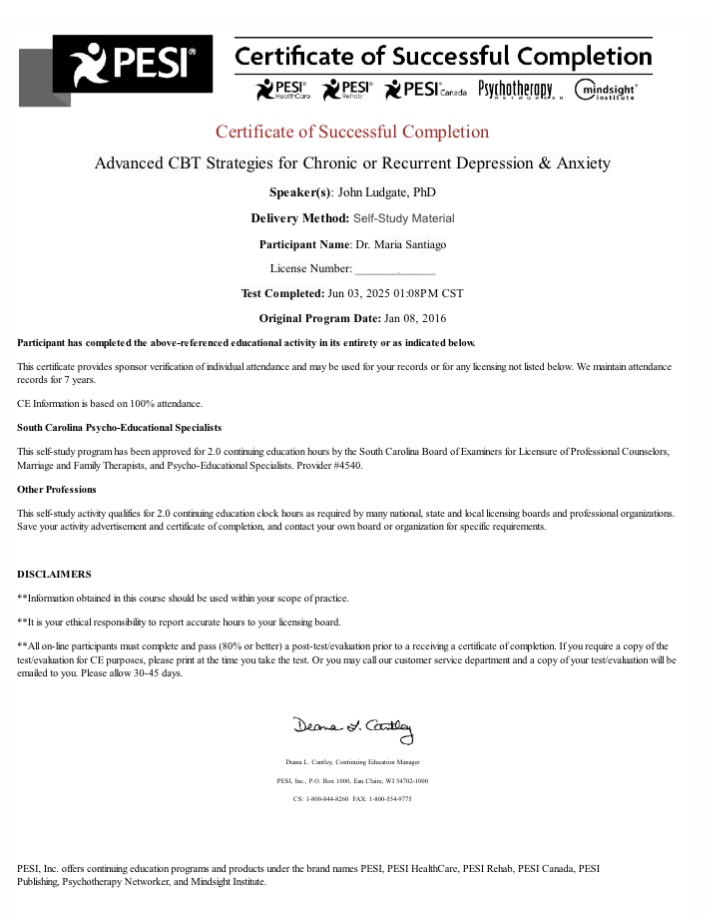
Staying Current with Evidence-Based Practice
Continuing education in Cognitive Behavioral Therapy (CBT) is essential for professionals working with chronic and recurrent depression and anxiety, especially in the context of learning disabilities. CBT is one of the most thoroughly researched and evidence-based interventions for these conditions, offering practical, goal-oriented tools that help clients transform negative thought patterns, improve emotional regulation, and develop effective coping strategies. Staying updated through ongoing education ensures that you can deliver the latest, most effective techniques to your clients, which is critical for achieving positive outcomes.
Adapting CBT for Learning Disabilities
Individuals with learning disabilities often experience higher rates of anxiety and depression, and research shows that CBT—when appropriately adapted—can be highly effective for this population. Continuing your education allows you to:
Enhancing Professional Competence and Client Outcomes
Ongoing training in CBT not only fulfills licensure requirements but also enriches your professional development, keeping your skills sharp and your knowledge base current. This commitment:
Continuing education is not just a regulatory necessity; it is an opportunity to connect with peers, exchange ideas, and rejuvenate your passion for helping others. It challenges you to think critically, embrace new perspectives, and bring innovative solutions back to your practice.
Continuing education can be a gift. It activates our brain to learn new information which we can bring back to our clients. It challenges us to stay up to date on the latest research and cutting edge treatment.
Artificial Intelligence: The Critical Skill for 2030
**Artificial intelligence (AI) is quickly becoming as essential as reading and writing-by 2030, AI literacy will be a foundational skill for personal, academic, and professional success.**
Why AI Skills Are Becoming Fundamental
**Workforce Transformation:** By 2030, AI is expected to transform up to 70% of jobs, shifting the labor market toward a skills-based, human-centered ecosystem[1]. The World Economic Forum warns that 39% of workers’ core skills will change by 2030, with AI, big data, and digital literacy at the forefront.
**Economic Impact:** AI could create 20 to 50 million new jobs globally by 2030 and contribute up to $15.7 trillion to the world economy[2]. This surge is driving a 46% increase in demand for AI-related skills across job postings since 2019.
**Education and Learning:** Just as reading and writing are gateways to knowledge, AI literacy is becoming the key to navigating and making sense of a digital, information-rich world. AI is already reshaping how we read, write, and learn-students use AI to summarize texts, generate essays, and even simulate debates, fundamentally altering traditional educational models.
What Makes AI Literacy as Foundational as Reading and Writing?
**Engagement with Knowledge:** Reading and writing are not just skills-they are the foundation of how we process ideas and communicate. AI now joins this foundation, as effective use of AI requires the ability to prompt, interpret, and critically evaluate AI-generated content.
**Critical Thinking and Adaptability:** The future demands not only the ability to use AI tools, but also to think critically about their outputs, understand their limitations, and apply insights creatively-skills long cultivated through reading and writing.
**Workplace Relevance:** AI literacy is rapidly becoming a basic requirement for professional success and innovation across all industries, much like basic literacy and numeracy were in the 20th century.
The New “Three Rs”: Reading, Writing, and AI
AI is not replacing traditional literacy-it’s joining it. The ability to read, write, and work with AI will define who thrives in the digital economy of 2030. Schools, businesses, and individuals who embrace this shift will be better prepared to navigate a rapidly changing world, while those who resist risk falling behind.
Confident use of artificial intelligence is therefore becoming a basic requirement for professional success and entrepreneurial innovation – in all industries, professions and positions.
**In short:** By 2030, AI literacy will stand alongside reading and writing as a critical skill for full participation in society, work, and lifelong learning. The future belongs to those who can read, write, and reason with AI.
Bibliography
[2] https://masterplan.com/en-blog/ai-skills
[4] https://www.oecd.org/en/about/projects/artificial-intelligence-and-future-of-skills.html
[5] https://bipartisanpolicy.org/blog/growing-need-for-ai-literacy/
[9] https://www.sciencedirect.com/science/article/pii/S2666920X21000357
[10] https://www.pcma.org/age-ai-soft-skills-remain-critically-important/
[11] https://papers.ssrn.com/sol3/papers.cfm?abstract_id=5213331
[12] https://www.weforum.org/stories/2025/01/ai-workplace-skills/
[13] https://technologymagazine.com/articles/wef-report-the-impact-of-ai-driving-170m-new-jobs-by-2030
[14] https://www.weforum.org/stories/2024/04/future-learning-ai-revolutionizing-education-4-0/
[15] https://www.datacamp.com/blog/what-is-ai-literacy-a-comprehensive-guide-for-beginners
[18] https://csteachers.org/ai-meets-the-science-of-reading-and-writing-skill-development/
[19] https://avidopenaccess.org/resource/ai-meets-the-science-of-reading-and-writing-skill-development/
[20] https://knight.as.cornell.edu/news/skill-material-or-inquiry-using-ai-purposefully-classroom

An educational evaluation for college application that uses the Woodcock-Johnson (WJ) is a comprehensive assessment process designed to measure a student’s cognitive abilities, academic achievement, and sometimes oral language skills. This evaluation is often required for students seeking accommodations in college, such as extended time on tests, or for those who wish to document learning differences or disabilities as part of the application process.
What Is the Woodcock-Johnson?
The Woodcock-Johnson (currently in its fifth edition, WJ V, and previously WJ IV) is a set of individually administered, standardized tests that assess:
– **Cognitive abilities** (intellectual functioning, problem-solving, memory, processing speed)
– **Academic achievement** (reading, writing, math, and academic knowledge)
– **Oral language abilities** (listening, speaking, comprehension).
Purpose in College Applications
For college applications, the Woodcock-Johnson is most commonly used as part of a psychoeducational evaluation to:
– Document learning disabilities or ADHD for accommodation requests
– Provide objective evidence of academic strengths and weaknesses
– Inform colleges of a student’s unique learning profile, especially for students seeking support services or alternative testing arrangements.
What the Evaluation Involves
– **Administration**: The WJ is administered one-on-one by a qualified professional (often a psychologist or educational diagnostician). The process typically takes 1–3 hours, depending on the batteries used.
– **Components**: The evaluation may include the Tests of Achievement (academic skills), Tests of Cognitive Abilities (intellectual functioning), and sometimes Tests of Oral Language.
– **Subtests**: These cover skills such as reading comprehension, math calculation, writing fluency, spelling, listening comprehension, and more.
– **Scoring**: Results are provided as standard scores, percentiles, and age/grade equivalents, and are interpreted in the context of the student’s educational history and other relevant data.
Why Colleges Request or Accept It
– **Objective Data**: The WJ provides norm-referenced, objective data about a student’s academic and cognitive functioning.
– **Diagnosis and Documentation**: It is widely accepted for diagnosing learning disabilities and for documenting the need for accommodations under the Americans with Disabilities Act (ADA) and Section 504.
– **Insight for Support**: Colleges use this information to determine eligibility for academic support services and to tailor accommodations to the student’s needs.
Typical Process
1. **Referral**: A student is referred for evaluation (by a counselor, doctor, or as part of a college’s application process).
2. **Testing**: The WJ is administered, possibly along with other assessments (e.g., IQ tests, attention or executive function measures).
3. **Report**: A comprehensive report is generated, summarizing findings, diagnoses (if any), and recommended accommodations.
4. **Submission**: The report is submitted to the college’s disability services or admissions office as required.
Key Points
– The Woodcock-Johnson is a trusted, comprehensive tool for educational evaluation from childhood through adulthood.
– For college applications, it is primarily used to document learning differences and support requests for accommodations.
– The evaluation must be recent (usually within 3–5 years) and conducted by a qualified professional to be accepted by most colleges.
In summary, an educational evaluation with the Woodcock-Johnson for college application provides detailed, standardized information about a student’s learning profile, which is essential for documenting learning disabilities and securing appropriate academic accommodations in higher education settings.

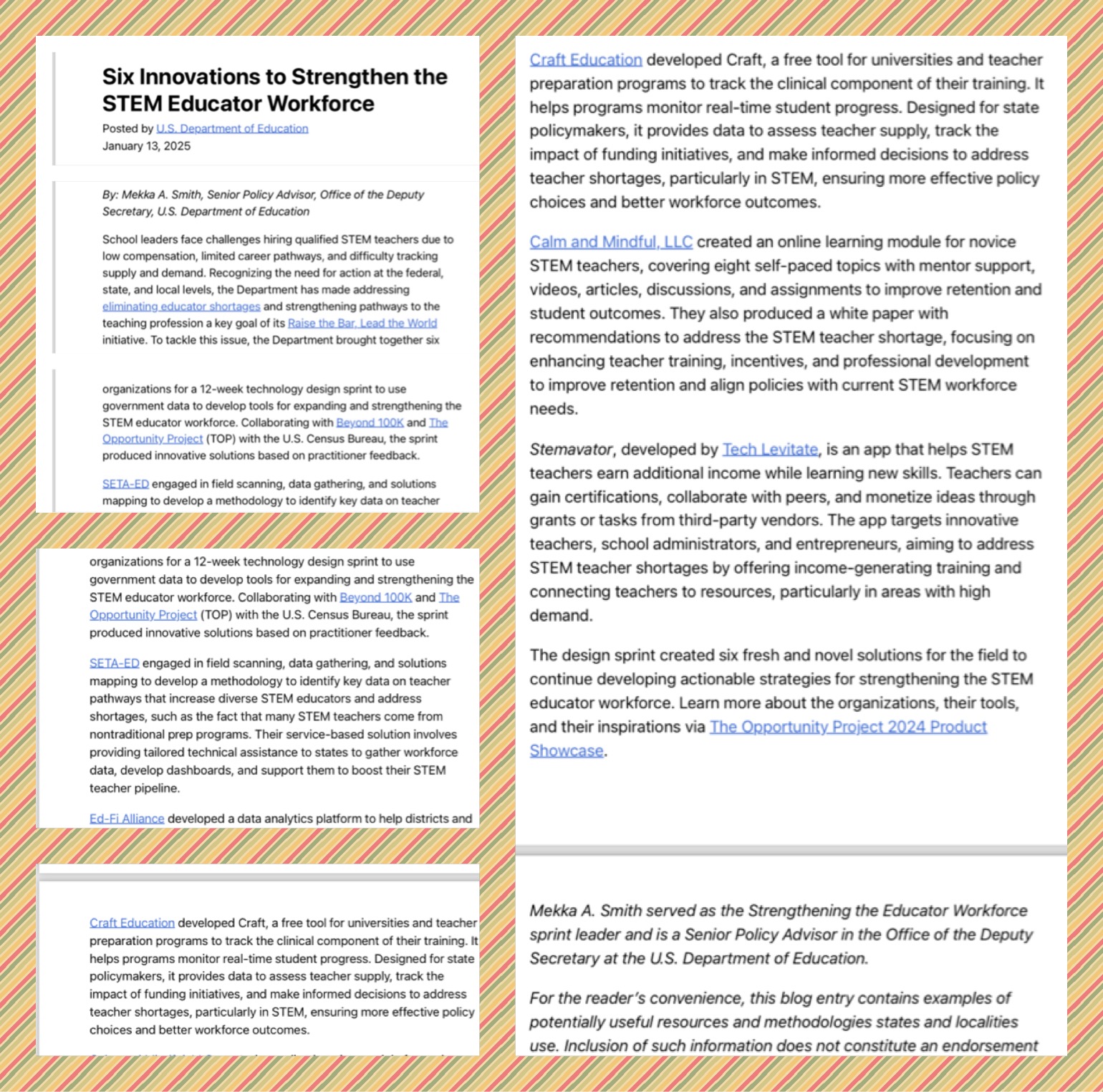
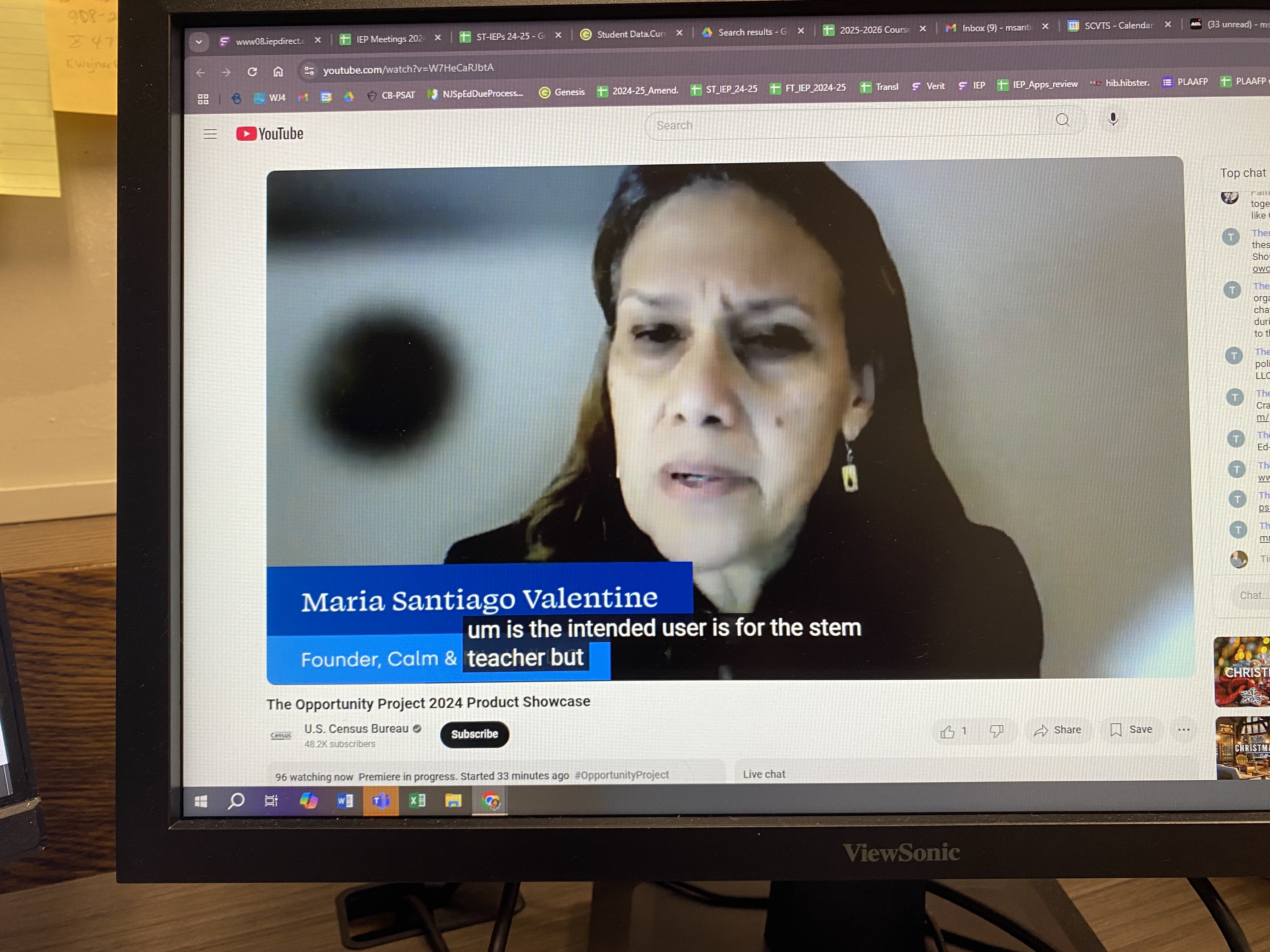
We did it!!!! Family owned- small business [est. 2016]. After 7 months of research, qualitative data analysis and literature review on the topic we are proud of sharing our products solutions to United States federal agencies.
Exciting news! Our non tech products are now available to federal agencies. These innovative solutions address the STEM Educators Workforce Shortage Watch our launch video on the @uscensusbureau YouTube channel to learn more: [https://lnkd.in/e9UDj_7r] #federalagencies #newproductlaunch #innovation”
Thank you Mekka Smith, Thera Naiman and Haley Ashcom for the opportunity to showcase our work.
“Dame un momento pa probarte de que estoy hecho
Je, je, je
Soy el que va cuesta arriba soy el que va al acecho
Je je je
Sé que se oye egocentrista
Pero lo digo sin maldad
Si nada de esto significara algo
No habría un (Roberto) Clemente
No habría un (Raúl) Juliá”
[Fiel a la Vega – Wanabí lyrics]
Walden University
Walden University Alumni
U.S. Department of Education
U.S. Census Bureau
El Poder En Ti
NBCUniversal Telemundo Enterprises



 Calm and Mindful, LLC