Staying Current with Evidence-Based Practice
Continuing education in Cognitive Behavioral Therapy (CBT) is essential for professionals working with chronic and recurrent depression and anxiety, especially in the context of learning disabilities. CBT is one of the most thoroughly researched and evidence-based interventions for these conditions, offering practical, goal-oriented tools that help clients transform negative thought patterns, improve emotional regulation, and develop effective coping strategies. Staying updated through ongoing education ensures that you can deliver the latest, most effective techniques to your clients, which is critical for achieving positive outcomes.
Adapting CBT for Learning Disabilities
Individuals with learning disabilities often experience higher rates of anxiety and depression, and research shows that CBT—when appropriately adapted—can be highly effective for this population. Continuing your education allows you to:
- Learn and apply modifications to standard CBT protocols, making them accessible for clients with varying
cognitive and verbal abilities. - Understand the unique challenges faced by those with learning disabilities, such as difficulties in linking thoughts, feelings, and behaviors, and the importance of building trust and therapeutic alliance at a pace suited to their needs.
- Stay informed about new research, techniques, and case studies that illustrate best practices for this group.
Enhancing Professional Competence and Client Outcomes
Ongoing training in CBT not only fulfills licensure requirements but also enriches your professional development, keeping your skills sharp and your knowledge base current. This commitment:
- Enables you to tailor interventions to the specific needs of clients with learning disabilities, increasing their engagement and the likelihood of sustained improvement.
- Equips you to address complex cases of chronic or recurrent depression and anxiety, where standard interventions may not suffice without adaptation.
- Fosters a collaborative, supportive therapeutic environment, which is especially vital for clients with histories of trauma or mistrust of authority figures.
Continuing education is not just a regulatory necessity; it is an opportunity to connect with peers, exchange ideas, and rejuvenate your passion for helping others. It challenges you to think critically, embrace new perspectives, and bring innovative solutions back to your practice.
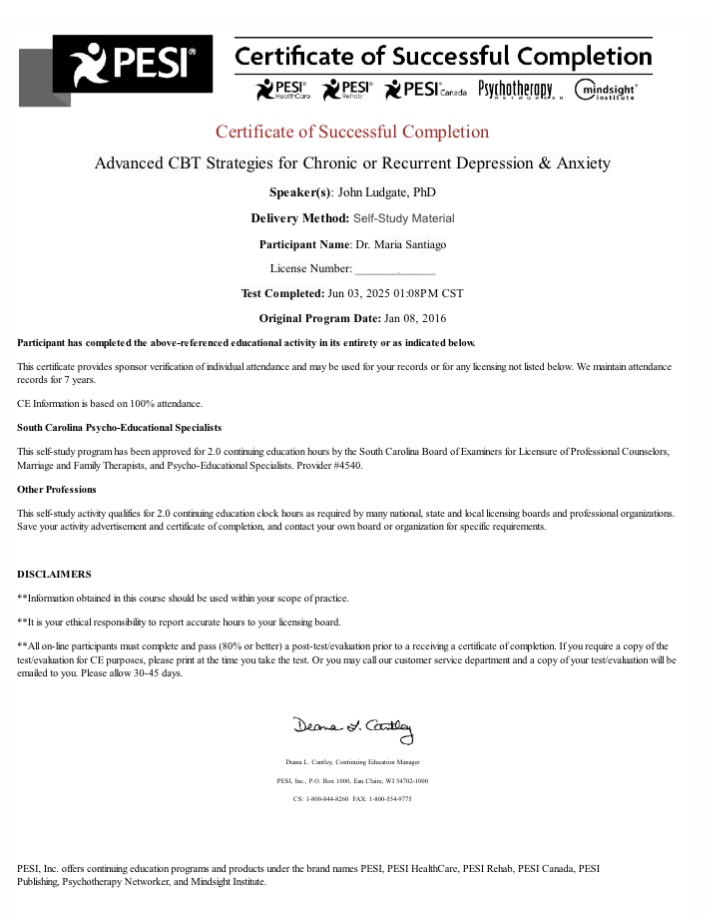
Continuing education can be a gift. It activates our brain to learn new information which we can bring back to our clients. It challenges us to stay up to date on the latest research and cutting edge treatment.




 Calm and Mindful, LLC