
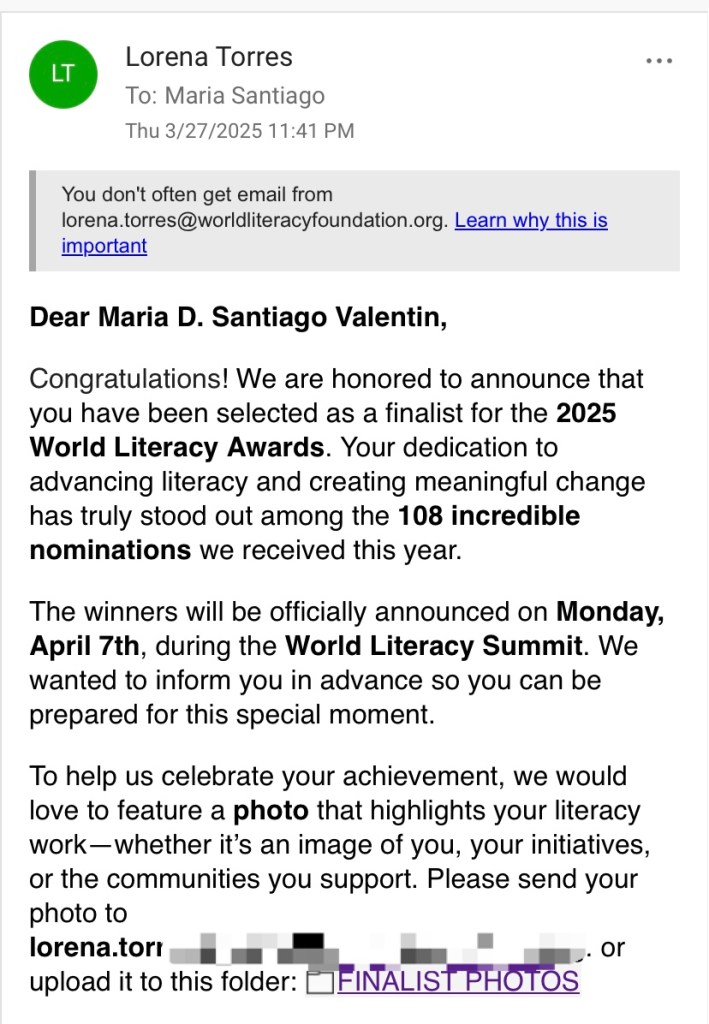
I am deeply honored to share that my doctoral research has been recognized under the category of Academic Research Recognition as one of the five finalists at the prestigious World Literacy Summit, standing out among 108 dissertations submitted from around the globe. This recognition not only highlights the significance of my work but also underscores the importance of advancing literacy within Career and Technical Education (CTE) as a means to drive social change, break cycles of poverty, and promote socioeconomic mobility.
The World Literacy Summit: A Global Platform for Literacy Advocacy
The World Literacy Summit, held biannually at Oxford University, is a globally renowned event that brings together literacy leaders, policymakers, researchers, and educators from over 85 countries. The summit serves as a platform to advocate for literacy as a cornerstone of sustainable development and social equity. It features diverse presentations on topics such as early childhood literacy, digital literacy, and literacy’s role in addressing gender inequality and community development,
This year’s summit was particularly special for me as I presented my doctoral study research tomorrow in Room 6 at the Examination Schools at Oxford University. My project study, which was completed as part of my doctoral capstone with Walden University in 2023, delves into how integrating literacy into CTE programs can empower individuals to overcome socioeconomic barriers. It is available for public access online.
The Impact of Literacy in Career and Technical Education
My research focuses on the intersection of literacy and CTE, emphasizing how embedding reading and writing skills into technical education equips students with both academic and practical tools for success. CTE programs are uniquely positioned to enhance literacy because they combine rigorous academic content with hands-on training. This dual approach motivates students by connecting learning to real-world applications, making literacy more relevant and engaging.
For example, students in CTE courses often engage with industry-specific texts, technical manuals, and trade publications. These materials not only improve their reading comprehension but also prepare them for workplace communication. Additionally, writing assignments such as project reports or business plans help develop critical thinking and organizational skills. By fostering these competencies, CTE programs contribute to breaking cycles of poverty by equipping students with skills that enhance employability and upward mobility.
Literacy as a Catalyst for Social Change
Education has long been recognized as a powerful driver of social mobility. By cultivating both social and cultural capital, it enables individuals to access opportunities that were previously out of reach. My research highlights how literacy within CTE can serve as a bridge for individuals from disadvantaged backgrounds to enter well-paying careers, thereby disrupting intergenerational poverty.
Moreover, literacy empowers communities by fostering informed decision-making and active participation in societal development. In today’s digital age, where technological advancements are reshaping industries, digital literacy is particularly crucial. Ensuring equitable access to education and technology can further amplify the role of CTE in promoting social mobility.
Acknowledgment from Esteemed Scholars
Being selected as a finalist at the World Literacy Summit is an award in itself, given the caliber of judges evaluating the submissions. The panel was composed by distinguished professors from Oxford University. Their acknowledgment lends tremendous credibility to my work and inspires me to continue advocating for literacy-driven solutions to global challenges.
I would also like to extend my heartfelt congratulations to Dr. John Gabrieli, this year’s award winner. Dr. Gabrieli’s groundbreaking work at MIT and the McGovern Institute for Brain Research has significantly advanced our understanding of brain mechanisms related to cognition and learning disorders such as dyslexia. His contributions exemplify how research can transform lives by addressing critical issues in education and mental health.
Looking Ahead
After my presentation at Oxford University, I am filled with gratitude for this opportunity to share my findings on such an esteemed global stage. This recognition is not just a personal milestone but also a testament to the transformative power of education and literacy in creating pathways out of poverty.
I remain committed to advancing this mission through continued research and advocacy. Together with educators, policymakers, and community leaders worldwide, we can harness the potential of literacy to build a more equitable and inclusive society.
For those interested in exploring my work further, my doctoral capstone can be accessed online through Walden University’s repository, ProQuest, ERIC or Google Scholar.


 Calm and Mindful, LLC